Activity
Restoration and conservation works
Underground bath

Since its establishment, the main mission of the “Icherisheher” State Historical-Architectural Reserve Administration has been the protection of Icherisheher and the preservation and promotion of its tangible and intangible heritage. The Administration pays special attention to the restoration and maintenance of historical and architectural monuments. It should be noted that restoration and conservation works in the territory of Icherisheher are carried out in accordance with the “Master Plan” prepared by an international group of experts with the organizational support of UNESCO. In addition, the Administration closely cooperates with the German company “Remmers” and the Austrian “Atelier Erich Pummer GmbH” to ensure high-quality restoration processes and to study foreign expertise.
In recent years, successful restoration and conservation projects completed at the Maiden Tower, the Shirvanshahs’ Palace Complex, the Mohammed Mosque, the Beylar Mosque, the Juma Mosque, the Marionette Theatre, the Double Fortress Walls, the Quadrangular Castle, and other monuments of world, national and local significance serve as clear examples of this work. According to the annually updated restoration and repair program, continuous measures are carried out to preserve historical and cultural monuments, ensure their architectural-aesthetic appearance, and extend their longevity.
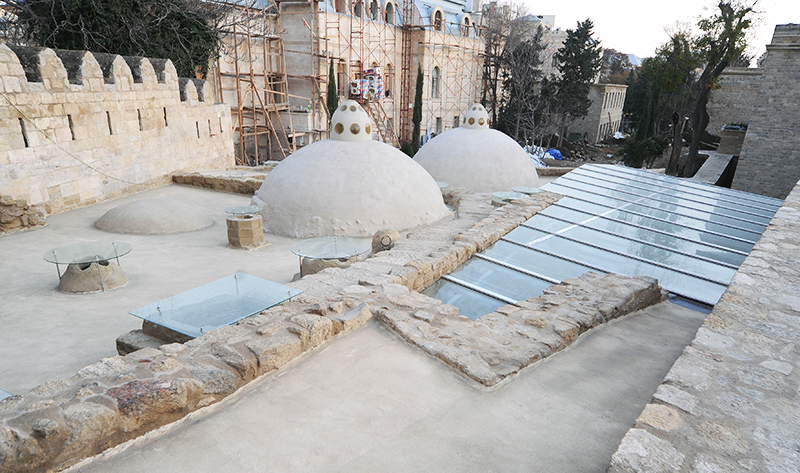
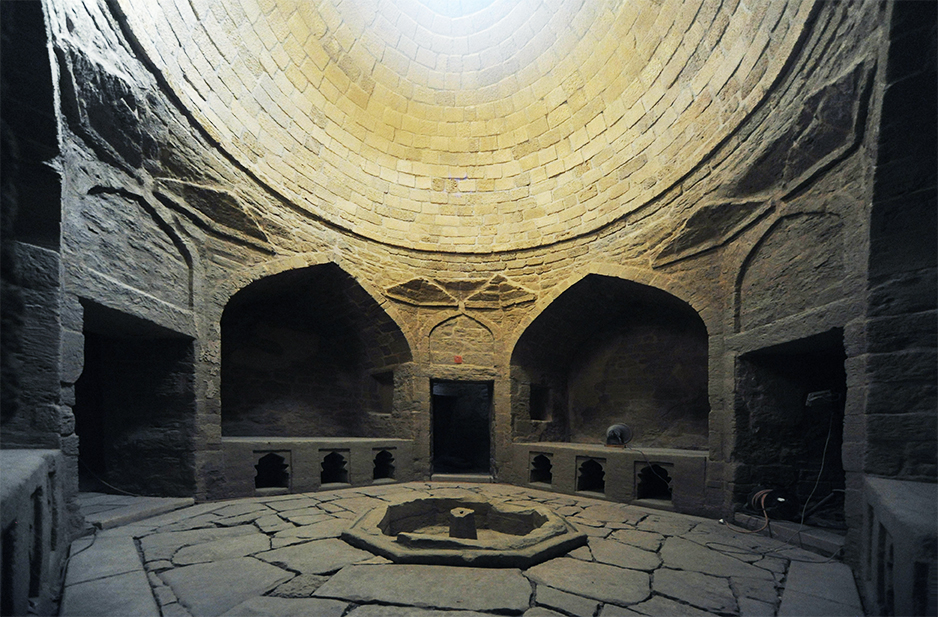
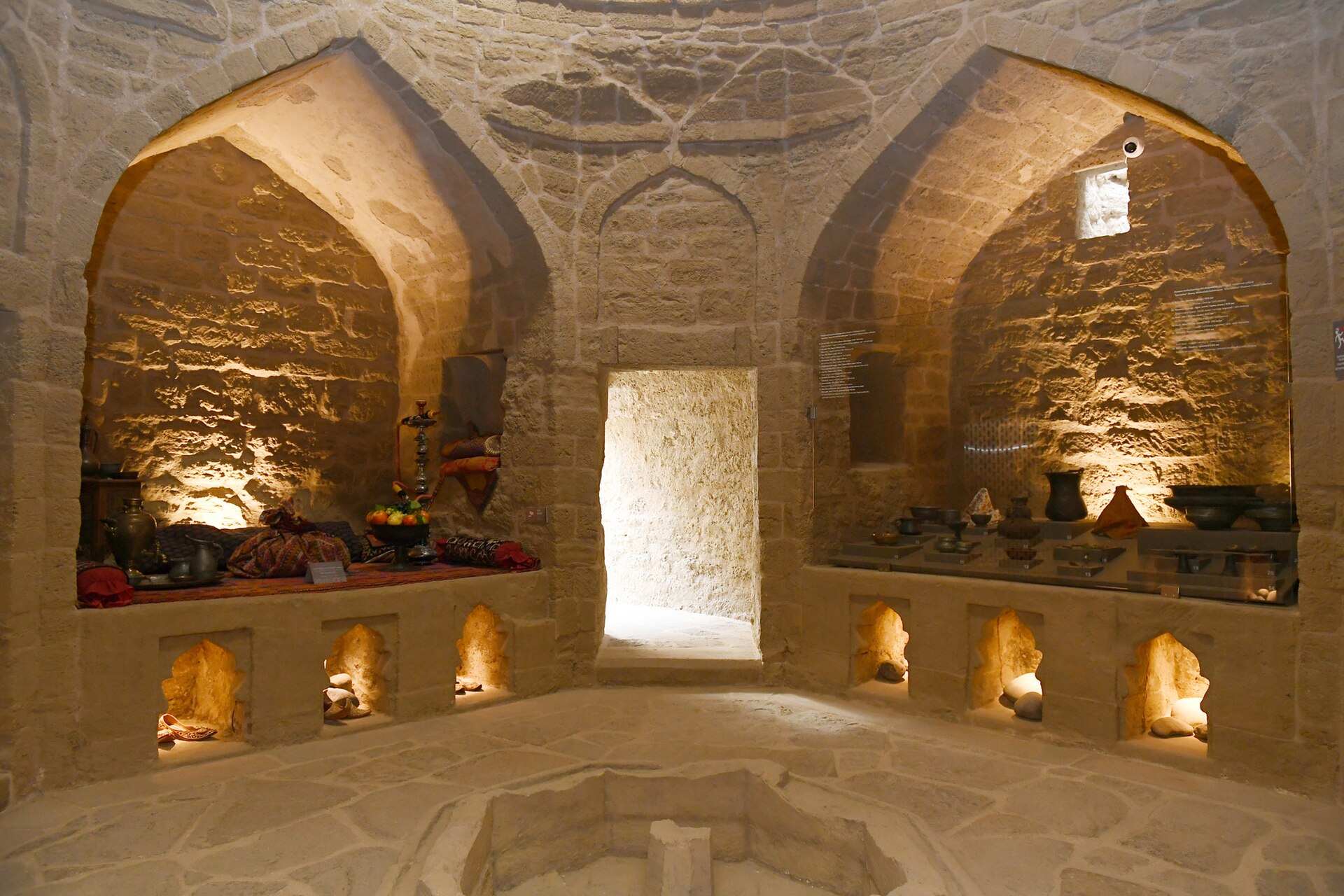
One of the most significant projects is the conservation of the 17th-century underground bath discovered in 2016 at 50 Boyuk Gala Street.
For centuries, caravans arriving in Icherisheher from distant lands passed through the fortress walls and were inspected at the local customs post. In accordance with the sanitary requirements of the time, public baths were built at the city entrance. Newcomers — merchants and travelers — were required to wash there, and the feet of pack animals were treated with “gudron,” a tar-based substance that served as an antiseptic.
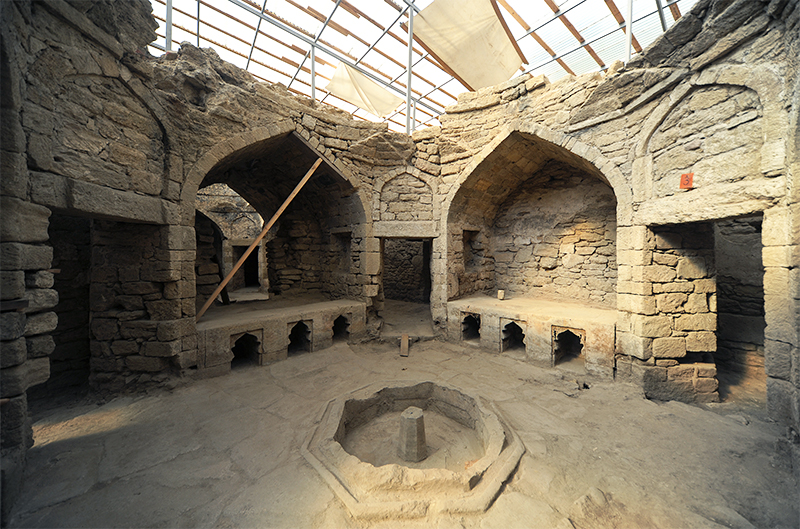
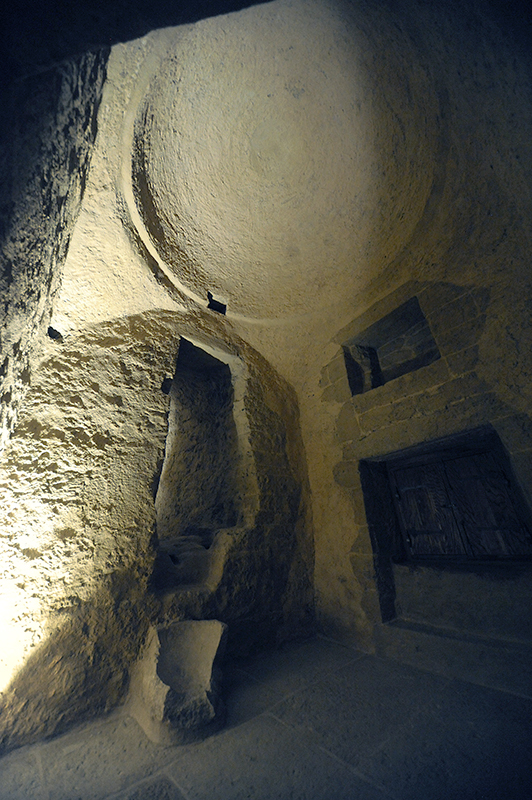
Preliminary results of excavations and observations show that the structure under study has a complex architectural design. The underground bath shares constructive similarities with other bath complexes in Icherisheher and was built below ground level to maintain stable temperature conditions.
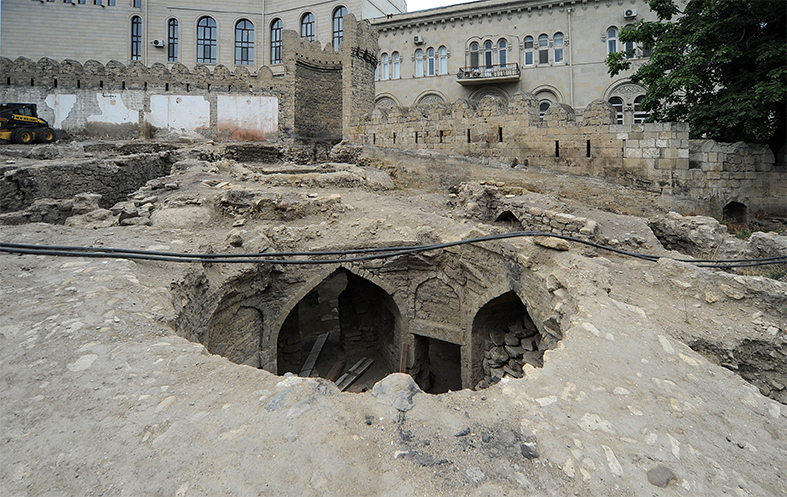
After the occupation of Baku by Russian forces in 1806, the bath ceased functioning, its domes were dismantled, the rooms were filled with waste, and the site was buried. A military commandant’s office was established on the territory. This situation continued during the Soviet era as well. Over the years, cracks formed in the walls and masonry, creating a risk of collapse.
As a result of archaeological excavations carried out in 2016–2017, the main part of the bath was cleared of soil and debris, and its architectural structure was identified. In 2018, extensive restoration and conservation works were conducted. In the future, it is planned to establish an open-air archaeological museum exhibition at the site.